

by Genevieve Balance Kupang
I. The First Encounter
I met you not in Frankfurt,
not in Starnberg's quiet light,
but in the humid heart of Manila,
where the air was thick with the scent of mimeographed pages
and the restless hunger of minds not yet arrived.
You came to us in De La Salle's and Maryhill School of Theologys seminar rooms in the 1990s,
not in flesh, though your words were flesh enough
You arrived through syllabi and arguments,
through the strange and beautiful insistence
that speech itself is sacred,
that every conversation carries within it the seed of its own justice.
I was studying religious studies and values then.
I did not yet know that you were teaching me
the grammar of transformation.
II. The School of Theology and the Resonance
Across the city, in Quezon City's quieter corridors,
Maryhill School of Theology opened its doors to me
thirty-six units of liberation theology,
the Adult Theological Education Program
drawing me deeper into the questions that Gutierrez and Boff had dared to ask:
Whose voice has been silenced?
Whose suffering is made invisible by the structures we call order?
And there you were again, Habermas, not named perhaps in every lecture,
but present in the logic of critique,
in the recognition that the powerful have always colonized the conversation,
that the public sphere you theorized was never truly public
until the excluded were invited in.
Liberation theology andcommunicative actionwere,
I began to understand, the same flame in different vessels
One burning in the favelas of Latin America,
One lit in the ruins of postwar Germany
Both insisting that reason belongs to everyone,
that the silenced have the right to speak,
that truth emerges not from domination but from dialogue freely entered.
III. What You Taught Me Before I Knew My Name as Scholar
You taught me that argument is not war.
You called it "the unforced force of the better argument"
That in the ideal speech situation,
outcomes depend not on power but on reason,
freely given and freely received.
You taught me that the public sphere is not a given
It is a practice, a discipline, a moral commitment
That every time I pick up my pen, I am either enlarging
or diminishing the space where democratic life is possible.
You taught me that language is not merely instrument.
You knew this in your bones
Born with a cleft palate,
you understood spoken language as "a layer of commonality
without which we as individuals cannot exist."
And I, a woman from the Cordillera,
whose people have always known that the word
is the bond between self and cosmos, recognized in you, a kindred knowing.
Before I had the language of Applied Cosmic Anthropology,
You gave me the epistemology of listening
that knowledge is not extracted,
it is negotiated, co-created, earned in the honest fire of genuine encounter.
IV. The Journalist and the Philosopher
When I began writing for Pressenza,
I did not call myself Habermasian.
But your spirit walks in every piece I file.
You insisted, against the noise of the age,
that communicative rationality is located not in the structure of the cosmos alone
but in the structures of interpersonal linguistic communication.
That the goal of all genuine speech is mutual understanding.
So when I write about mandala, education and the arts
about indigenous knowledge and decolonization
about corruption as structural violence
and peace education as its antidote
I am practicing your theory in the field.
Peace journalism is not passive.
It is the radical act of insisting on the public sphere
for those who have none
for the elder whose story is not in the archive,
for the student protester whose voice is drowned by the machinery of power
for the victim whose truth has been made legally inadmissible by the powerful.
Every article I submit is an act of communicative action
It is my covenant with your teaching.
V. Your Greatest Gifts to the World
You reworked Critical Theory as developed by Adorno and Horkheimer
The theory that analyzes society, politics, and culture
And calls into question existing power structures,
ideologies and relations of domination.
But you refused to surrender to despair.
Where others saw only the administered world,
you still believed in the emancipatory power of reason.
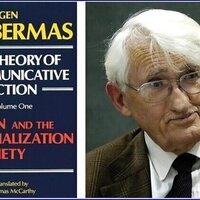
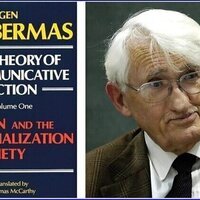
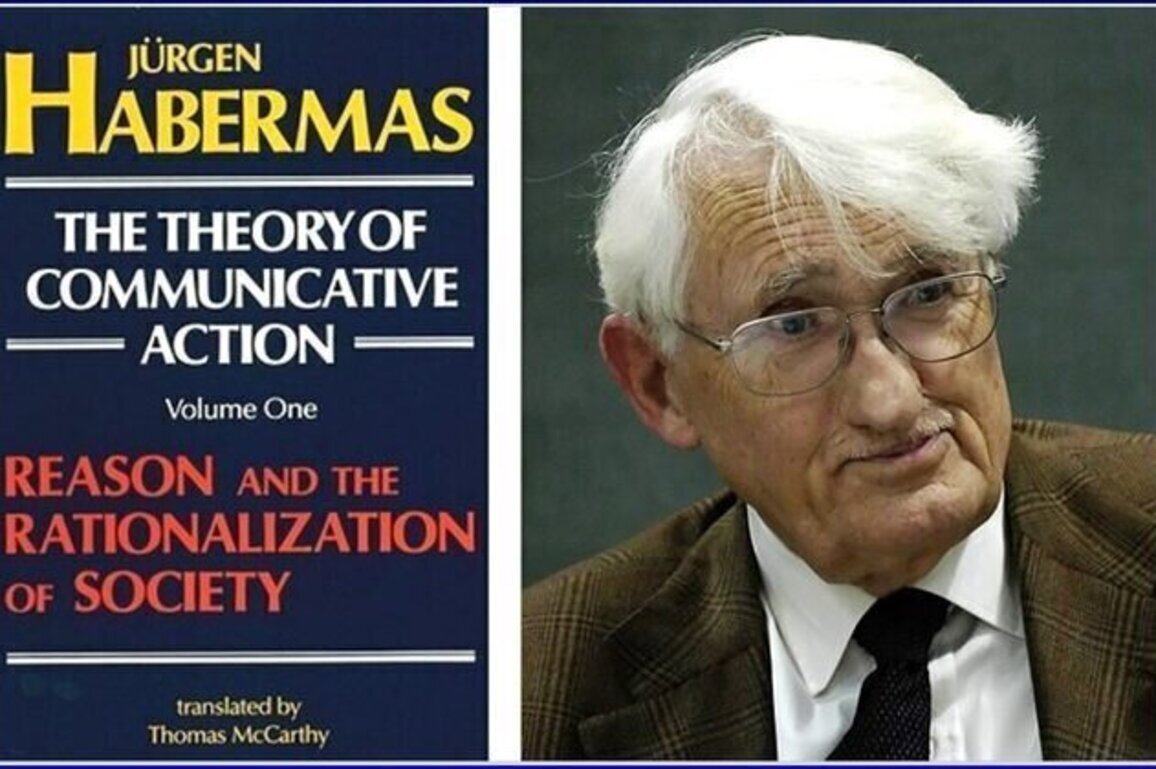
Your Theory of Communicative Action
two volumes, 1984 and 1987
Your ideas of the public sphere, discourse ethics,
your discourse theory of law and democracy
These became the connective tissue between Frankfurt School critical theory
and today's living political philosophy.
You shaped theology because liberation theologians recognized
that the preferential option for the poor is structurally identical
to your insistence that those excluded from discourse
must be brought back to the table.
You shaped liberal arts
because you insisted that education is not the transmission of content
but the formation of the communicatively competent subject
the citizen who can argue, listen, and be persuaded.
You shaped communication theory
because you gave journalists and scholars alike
a moral framework for their craft, not just what to say,
but how and why the saying must be accountable to the other.
John Rawls himself, asked who was the greatest theorist of democracy,
said your name, "Habermas," with gravity and emotion,
noting that you were German, that you grew up under Nazism,
and that this made your commitment to reason all the more powerful.
VI. The Bridge to My Advocacy
You are present in every dissertation I supervise,
in every colloquium we convene,
in every anti-corruption forum I co-organize
where voices from Nepal, Indonesia, the Philippines, and elsewhere
speak to each other across the distance of difference.
You are present in Project DAD-DAD-AT
in the insistence that Cordilleran stories deserve their place in the human archive,
that indigenous knowledge is not supplemental
but foundational to any true public sphere.
You are present in my peace education work
Because WCCI, Pathways to Peace, WURII's mandate
these are all exercises in building what you called the communicative community
where no voice is structurally silenced, where reason has a chance.
Kapwa, the Filipino soul-bond between self and other,
is your communicative action translated into metaphysics.
We arrived at the same place from different rivers.
VII. Farewell, Old Teacher
You were called "a beacon in a raging sea"
and so you were, for those of us who needed to believe
that reason could survive the century's catastrophes,
that discourse was not dead,
that the public sphere could be rebuilt even in the rubble of authoritarianism.
You were the last surviving representative of the Frankfurt School,
the final keeper of that difficult, necessary flame.
Now we carry it.
Rest in the deep reason you always sought.
Rest in the speech that was always, for you,
an act of love toward the stranger
the cleft-palated boy from Dsseldorf
who learned that words were how we hold each other
across the terrifying distance of being human.
Your public sphere lives in every honest sentence.
Yourcommunicative actionlives every time the silenced find their voice.
Peace, force, and joy, Jrgen Habermas.
The conversation continues.
#############
About the Author:
Dr. Genevieve Balance Kupang, International Relations Officer, Baguio Central University | Applied Cosmic Anthropologist | Peace Educator | Pressenza Contributor; Baguio City, Philippines March 15, 2026
Pressenza Philippines