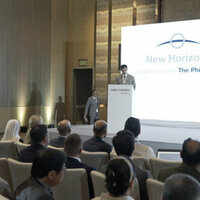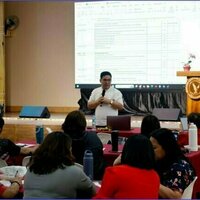


The Safe Tourism Destination for Women training programme
Madhya Pradesh's Safe Tourism Destination for Women programme is not only transforming hundreds of lives, it is helping to shift perceptions about women's roles in society. In nothing short of a quiet revolution, women once confined to household duties are now guiding tourists, operating boats and becoming the new face of Indian tourism.
Implemented by the Madhya Pradesh Tourism Board (MPTB) in collaboration with UN Women, this model promotes a sustainable approach to the safety and security of women in public spaces – particularly tourist destinations – by leveraging women's economic empowerment. Government agencies provide institutional support, UN Women contributes training and gender expertise, and grassroots organizations ensure community connection. As a knowledge partner, UN Women helps strengthen local partnerships, design trainings for confidence-building, and leadership development.
Like their fellow programme participants, the stories of Verma and Gowda embody this revolution. They challenge traditional gender norms and inspire younger generations to pursue professional development – all while uplifting local economies.
Madhu Verma’s story: From riverbank observer to official guide
"I used to stand on the banks of the river, watching others live their lives," says Madhu Verma. "Now I steer my own course – and I help others find theirs."
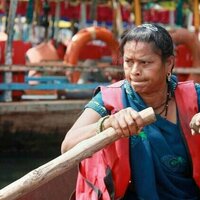
Just a year ago, Verma's daily routine was no different from countless other women in her community: household chores and limited aspirations. The river she now navigates as a tour operator was completely dominated by men, who made an income from ferrying tourists across its sacred waters. When the opportunity to join a tourism training programme for women arose, people were skeptical. Verma’s family discouraged her; neighbours gossiped. She questioned herself: "How could I, a woman, stand on a boat and talk to strangers?"
Supported by Aprajita Mahila Sangh, a local grassroots organization partnering with UN Women and MPTB, she joined the first cohort of women enrolled in the programme. It wasn't easy. She had to wake up earlier, travel outside her village, and sit in a classroom for the first time in many years.
"I was terrified of public speaking," Verma admits. But she was inspired by the stories her grandmother used to tell: myths and legends about Omkareshwar, a highly revered pilgrimage site. "Now, I can tell stories while steering a boat. Tourists listen. They ask questions. They smile. And I smile too."
The visibility of Verma and other female professional guides on the waters of the Narmada River challenges the gender norms that once held them in place – and creates a sense of safety for visitors. Women travellers, a major driver of tourism’s booming growth, report feeling more comfortable and welcomed in destinations where female guides and operators are present.
Because Verma’s monthly income has increased significantly, her daughter has been able to return to school. Her husband now proudly supports her work and other women in the community have come forward to enrol in the training.
Leela Gowda’s story: Building on a mother’s legacy
The hum of travellers' conversations was the soundtrack of Leela Gowda's childhood in Mandla, a small district in Madhya Pradesh. Her mother, Rama Bai, had started the village’s first homestay – a decision that not only brought financial stability but also ignited dreams within Gowda.
"My mother started this homestay when most women here had never even spoken to outsiders," she explains, gesturing toward the vibrant, welcoming space that was once just a simple family home. "I watched her welcome guests from across the world, despite knowing very little English or not having formal education."
As young Gowda accompanied visitors on walks through the village, pointing out medicinal plants and sharing folk tales, she discovered her own talent: storytelling.
Encouraged by her mother and supported by Adhar, a grassroots organization, Gowda pursued formal training through the Safe Tourism Destination for Women programme. She became a certified local guide, receiving comprehensive training that gave her practical skills in tourism management, conservation awareness and cultural interpretation.
While gaining her footing in the male-dominated field, Gowda often faced skepticism. Some questioned her ability to lead tours, manage logistics or explain the region's history. "I knew that my knowledge and passion spoke louder than the doubts," she says confidently. "And every satisfied guest was proof that I belonged."
Now, under her leadership, the family homestay has grown into a vibrant, sustainable business. She connects her guests to local artisans, farmers, and weavers – benefiting the broader community.
"The training taught me to see our village through new eyes," she explains. "What seems ordinary to us – our daily customs, our relationship with the forest, even our cooking methods – is fascinating to visitors."
The Safe Tourism Destination for Women programme has set goals to
10,000Train 10,000 women in hospitality
40,000Train 40,000 women in self-defense
50Reach women in 50 destinations across Madhya Pradesh
The ripple effect: Beyond individual success stories
To build capacity for more women-led tourism, the Safe Tourism Destination for Women programme has set out to train 10,000 women in hospitality and 40,000 in self-defence across 50 destinations across Madhya Pradesh.
"When a woman becomes visible in public space, she reclaims it – not just for herself, but for all women," says Sheo Shekhar Shukla, Principal Secretary of MPTB. "That's what this programme is doing."
The impacts from economic empowerment models like this extend far beyond individuals. Gowda, for instance, now mentors young girls in the village. "My mother created a door, and I'm trying to build hallways," she explains. "When girls in my village see me leading a tour or managing the homestay, they see what's possible. And that's how real change begins."
This is our moment to act
For 15 years, UN Women has worked with all women and girls, for women’s rights and gender equality. We will never give up. Now is the time to stand with us. You have the power to protect progress, sustain local women leaders, and deliver true change.
We are experienced enough to deliver. We are bold enough to transform.
Donate now